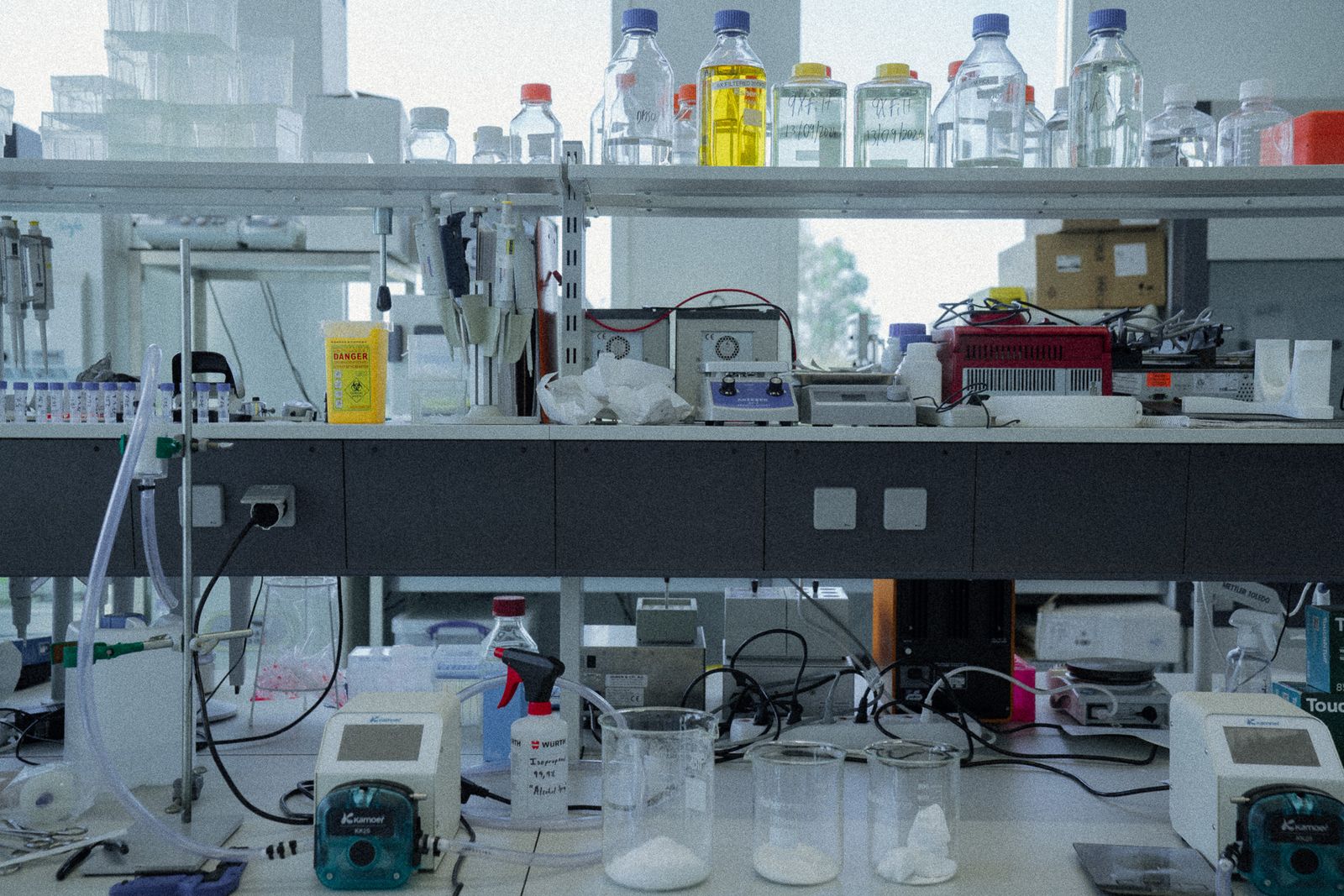
Predicting properties
We predict toxicity and glass-forming capacity straight from the composition. Glass-forming capacity is how readily a mixture turns to glass instead of ice. The temperature where that happens is called the glass transition.

How ice damages tissue, how vitrification turns water into glass instead and what research has shown so far.
When blood flow stops, tissue starts to run out of oxygen. This is called ischemia. Cooling slows the damage but cannot stop it, and each organ tolerates it for a different time. A heart can wait about 4 to 6 hours, lungs about 4 to 8, a liver about 8 to 12 and a kidney about 24 to 36 hours.12
Cryoprotective agents, or CPAs, keep ice from forming. To vitrify tissue, which means cooling it into a glass without any ice, today's mixtures need CPA to make up around 40 to 65 percent of the solution.4 At that level the CPA itself damages cells. Researchers call this the biggest barrier in the field.3, 4
40 to 65percent
of the solution in current vitrification mixtures is CPA4
The main CPAs still in use today were discovered in 1949 and 1959.13, 14
With enough CPA and fast cooling, water never forms crystals. Typical mixtures turn into a solid glass at around −120 to −130 °C.5, 6 This point is called the glass transition. Below it, molecules almost stop moving.
Ice
Glass
As the glass warms, ice can still form. This is called devitrification.5 How easily it happens depends on the CPA. More CPA keeps the glass stable, but more CPA also harms cells.4, 5 New methods like nanowarming heat the sample from the inside, faster and more evenly.6, 7 They do not solve the toxicity. CPA toxicity still limits the latest results.15 This is the problem we work on.
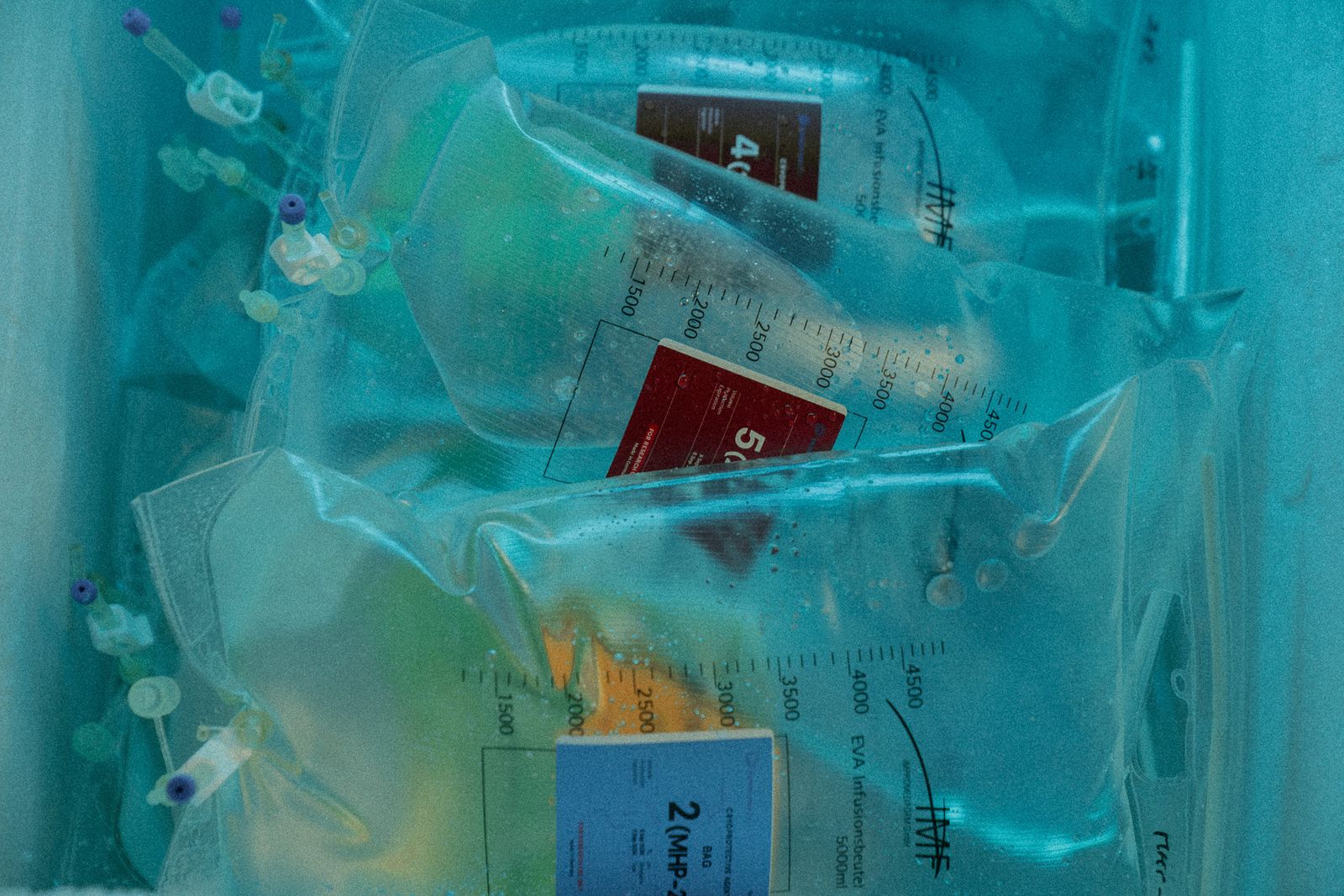
Results of the field so far. Vitrification is routine for embryos. In animals, whole organs have been vitrified, and some have been transplanted. A human organ has not.
Pig kidneys stored for over a year, rewarmed and transplanted. Follow-up lasted two hours. Injury was attributed to the CPA.
Preprint15A pig liver vitrified at liter scale without ice or cracks. Viability was not tested.
Peer reviewed7Rat kidneys stored for up to 100 days. All five recipients survived on the transplanted kidney.
Peer reviewed6A vitrified rabbit kidney was transplanted. One animal survived, with impaired function.
Peer reviewed8Embryos vitrified. Today this is routine in reproductive medicine.
Routine9A human organ vitrified, rewarmed and transplanted.
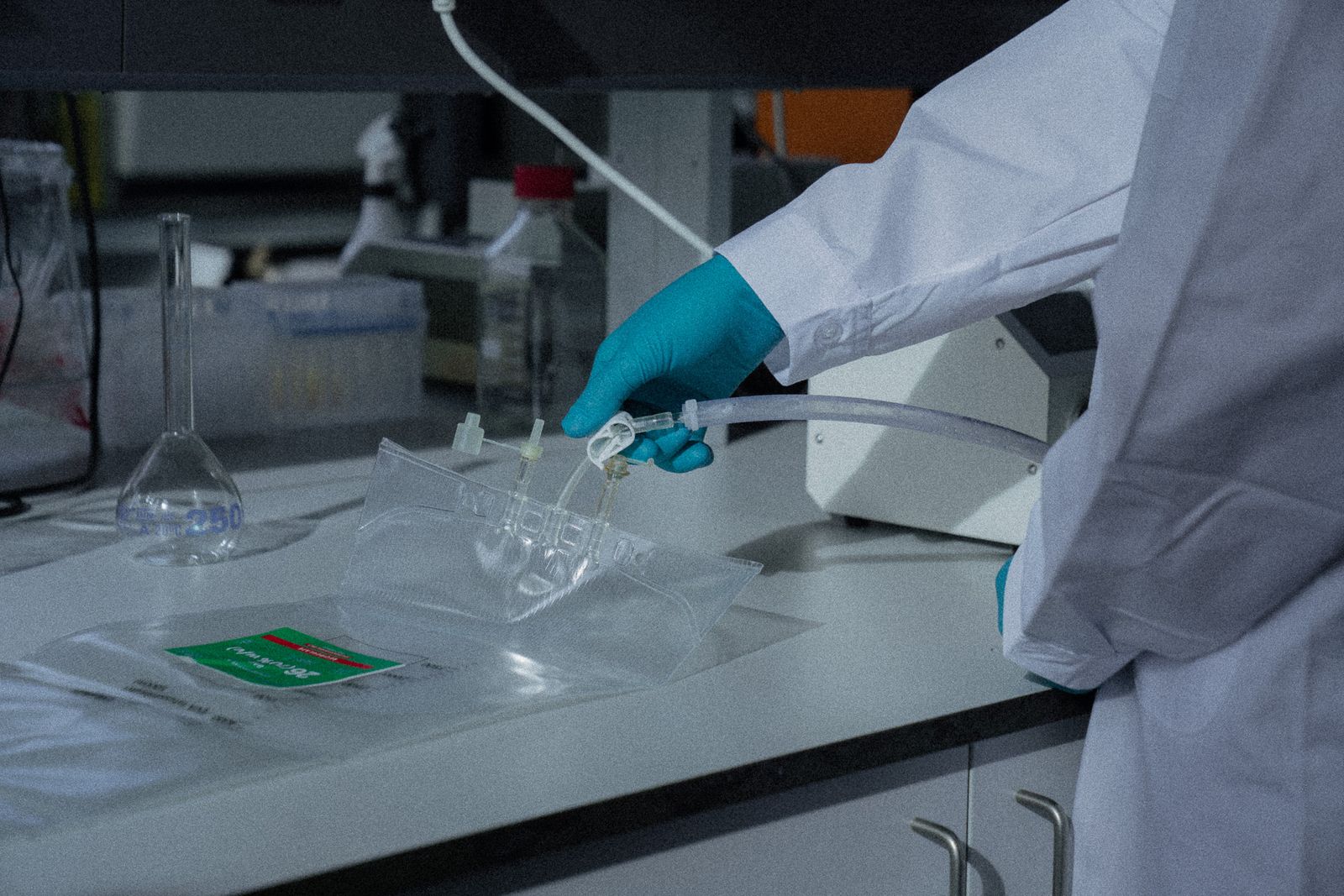
Every result above is limited by how toxic the protectant is. We screen candidate molecules on the computer first. Our cryobiology lab then tests the most promising ones for ice protection, glass formation and toxicity. We are looking for a cryoprotective agent, or CPA, that stops ice at a concentration cells can survive.
Early stage research. We are now building our discovery engine and validation lab.
Our models look at what a mixture is made of and predict how toxic it is and how well it forms glass. They learn from our own lab data. This lets us rank candidates before any lab work starts.
We predict toxicity and glass-forming capacity straight from the composition. Glass-forming capacity is how readily a mixture turns to glass instead of ice. The temperature where that happens is called the glass transition.
Vision models look at every well of a screening plate and score it as glass, haze or ice.
Prediction accuracy
IllustrationCycles
Every screening result goes back into the models as training data, so predictions improve with each cycle.
The animations in this section are illustrations, not model output.
Results from the lab go back into the models, so each new round of candidates starts from more data.
Machine learning models predict toxicity and glass-forming capacity from composition and then propose new candidates.
We are building robotic screens and vision models to score glass formation in hundreds of variants every week.
0wells scored as glass
Every organ differs in its vessels, size and tolerance, so each one gets its own formulation.
Transplanted, the kidney keeps the recipient alive.
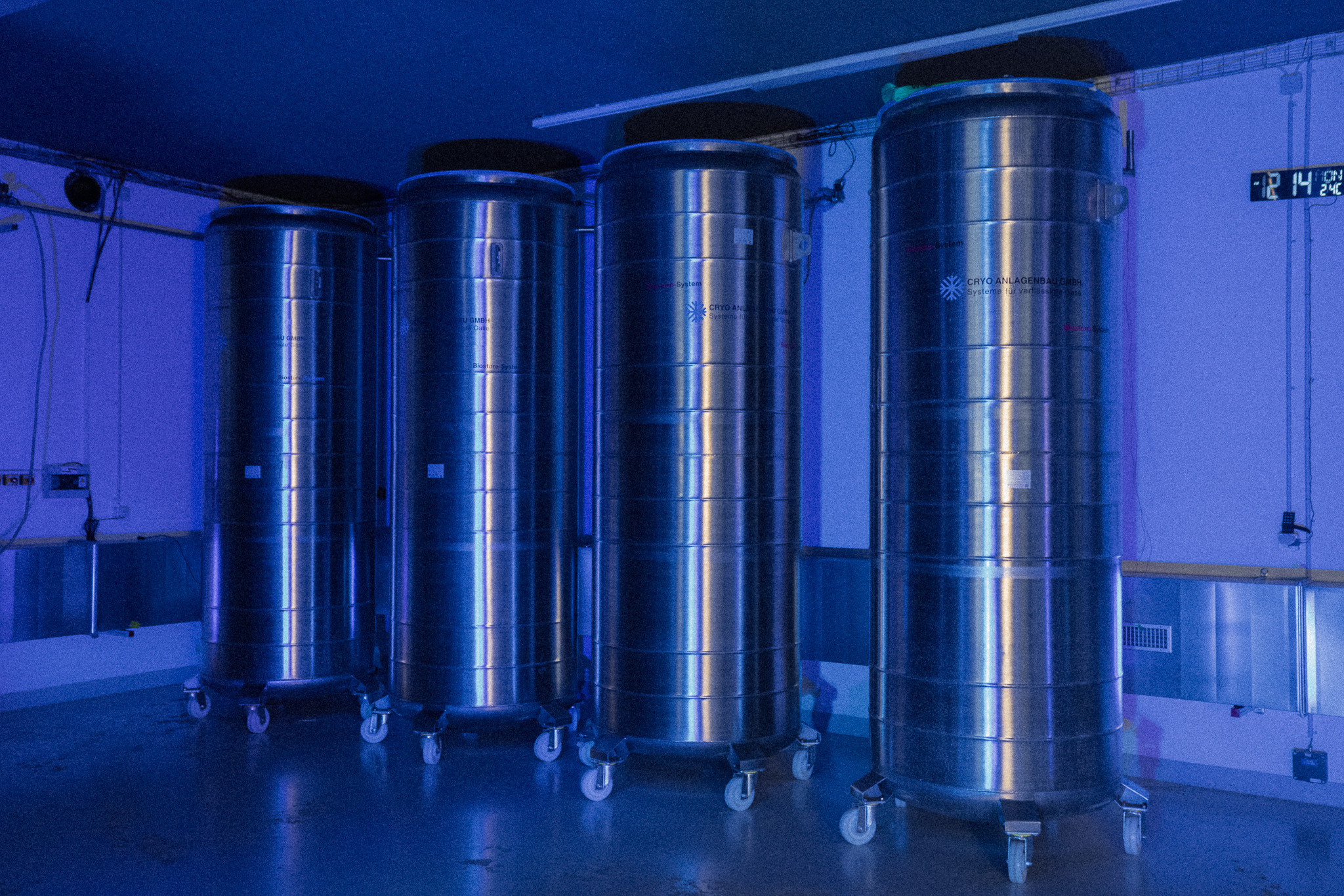
Organs that could be stored and reliably rewarmed would allow better donor matching, more time to prepare patients and fewer lost organs.10 This is a research goal and not a current capability.